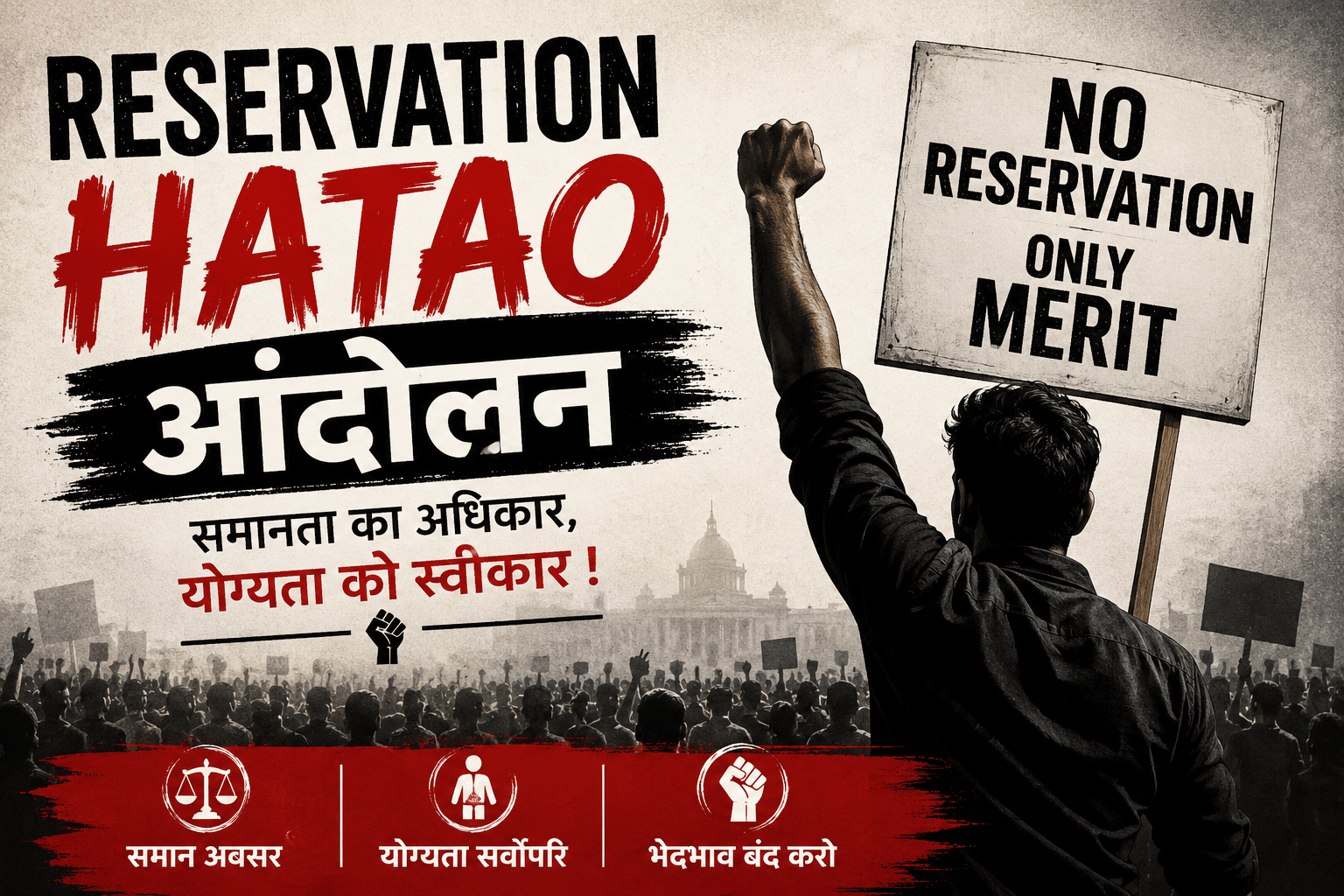
The campaign behind the viral Reservation Hatao Movement has used its official Instagram page, @reservationhataomovement, to spell out what it says it actually is: a citizen-led campaign focused on reservation policy, not a political outfit. One of its posts reportedly voiced frustration that the BJP-led government hadn't pursued the kind of reservation reform some supporters had hoped for, while stressing that the movement's own position is independent of any party. No individual has been clearly identified as the campaign's founder, and claims about who started it remain unverified.
Its Instagram following reportedly crossed the one-million mark within a single day, with some online estimates putting the number closer to two million shortly after — figures that come from social posts and discussion threads rather than any independently confirmed count. The movement's central ask goes beyond simply scrapping quota percentages: its messaging calls for the government to stop recording or requiring caste identity — whether Brahmin, Jaat, Gurjar, SC, ST, or otherwise — on everyday forms, admissions, and job applications, under the banner "One Nation. One Identity. Indian." Its main slogan pairs the demand for merit-based selection with the idea that removing caste from public life would remove the basis for caste-based quotas altogether.
Notably, part of the campaign's messaging borrows the phrase "Educate, Agitate, Organize," historically associated with Dr. B.R. Ambedkar — a choice that has itself become a point of debate, with critics questioning whether an anti-reservation campaign invoking Ambedkar's words is consistent with his own views on caste and representation.
The demand sits atop a genuinely complex constitutional backdrop. India's reservation framework draws on provisions allowing the state to make special arrangements for socially and educationally backward classes, along with a general 50% ceiling on reservations set by the Supreme Court's 1992 Indra Sawhney ruling, a separate 10% EWS quota added through the 103rd constitutional amendment, and a 2024 Supreme Court decision upholding sub-classification within the Scheduled Caste category. Supporters of the existing system continue to point to that history of litigation and constitutional deliberation as evidence that reservation addresses more than economic disadvantage alone, while the movement's supporters argue economic criteria should take precedence over caste.
For now, the campaign remains a largely digital phenomenon, with no confirmed plans for street protests or a formal organizational structure — meaning its real test will be whether this online surge translates into any sustained, offline movement.